Korean Bibimbap
Highlighted under: Authentic Planning
Korean Bibimbap is a delicious and colorful dish that combines rice with a variety of seasoned vegetables, protein, and a flavorful sauce. It's a feast for the eyes and the palate.
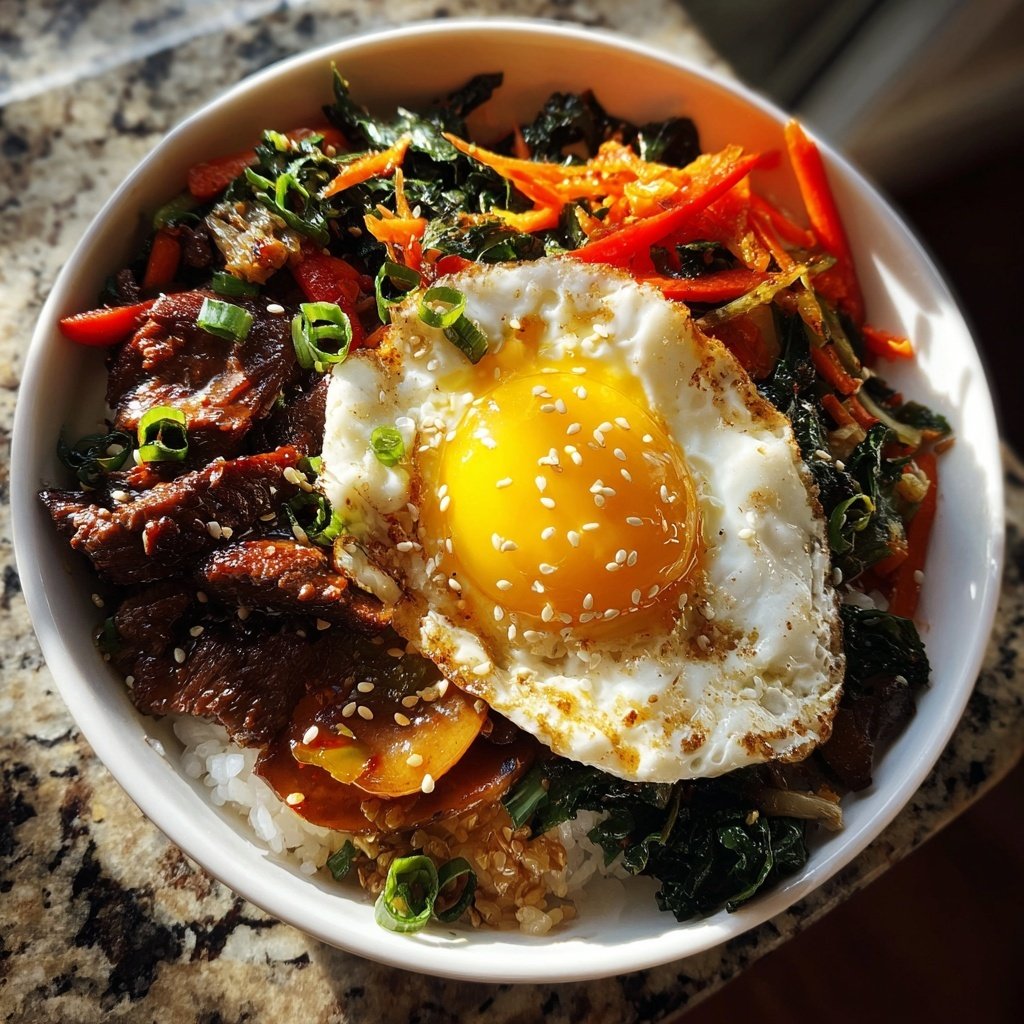
Korean Bibimbap is not just a meal; it's an experience. Originating from Korea, this dish represents harmony and balance, offering a mix of flavors and textures that come together beautifully.
Why You'll Love This Recipe
- Vibrant colors and fresh ingredients make it visually appealing
- Customizable with your favorite vegetables and proteins
- Packed with flavor from the gochujang sauce
The Essence of Bibimbap
Bibimbap is more than just a meal; it's a culinary experience that showcases the harmony of flavors and textures found in Korean cuisine. The word 'bibimbap' translates to 'mixed rice,' which perfectly encapsulates this dish's essence. Each ingredient plays a crucial role, contributing not only to the taste but also to the aesthetic appeal. The vibrant colors of the vegetables create an inviting presentation, making it a dish that delights the senses.
Traditionally served in a hot stone bowl, bibimbap allows the rice to crisp slightly at the bottom, adding a delightful texture to every bite. However, this recipe offers a more accessible method, making it easy to enjoy this classic dish at home. By blending fresh ingredients with gochujang, bibimbap becomes a nutritious and satisfying option for any meal.
Health Benefits of Bibimbap
Korean Bibimbap is not just a feast for the eyes; it's also packed with health benefits. The dish is rich in vitamins and minerals, thanks to the variety of vegetables used. Spinach, carrots, and zucchini are all excellent sources of nutrients that support overall health. This colorful medley provides antioxidants that help combat oxidative stress, promoting longevity and wellness.
Additionally, the inclusion of protein, whether from eggs or your choice of meat, ensures that this dish is well-rounded and satisfying. The use of gochujang adds a unique flavor profile while also containing ingredients that may boost metabolism. This makes bibimbap not just delicious, but also a smart choice for those looking to maintain a balanced diet.
Customizing Your Bibimbap
One of the best aspects of bibimbap is its versatility. You can easily customize the dish to suit your preferences or dietary restrictions. Whether you're a vegetarian, vegan, or a meat lover, bibimbap has something for everyone. Swap out the vegetables or add your favorite protein, such as tofu, beef, or chicken, to create a version that is uniquely yours.
Feel free to experiment with different sauces or toppings as well. While gochujang is traditional, you can adjust the spice level by adding more or less based on your preference. Adding toppings like sliced avocados, kimchi, or even nuts can introduce new flavors and textures, making each bowl a personal masterpiece.
Ingredients
Gather all the ingredients before you start cooking to ensure a smooth preparation process.
For the Bibimbap
- 2 cups cooked jasmine rice
- 1 cup spinach, blanched
- 1 cup carrots, julienned
- 1 cup zucchini, julienned
- 1 cup shitake mushrooms, sliced
- 4 eggs
- 4 tablespoons sesame oil
- 4 tablespoons gochujang (Korean chili paste)
- 1 tablespoon soy sauce
- 1 teaspoon sugar
- Salt to taste
- Sesame seeds for garnish
Make sure to adjust the ingredients according to your taste preferences and dietary needs.
Instructions
Follow these steps carefully for a perfect Bibimbap.
Prepare the Vegetables
Heat 1 tablespoon of sesame oil in a skillet over medium heat. Sauté the carrots, zucchini, and shitake mushrooms separately until tender. Season with salt and set aside.
Blanch the Spinach
In a pot of boiling water, blanch the spinach for 1-2 minutes. Drain and rinse under cold water. Squeeze out excess water and season with a pinch of salt and 1 teaspoon of sesame oil.
Fry the Eggs
In the same skillet, fry the eggs sunny side up in a little sesame oil until the whites are set but the yolk is still runny.
Assemble the Bibimbap
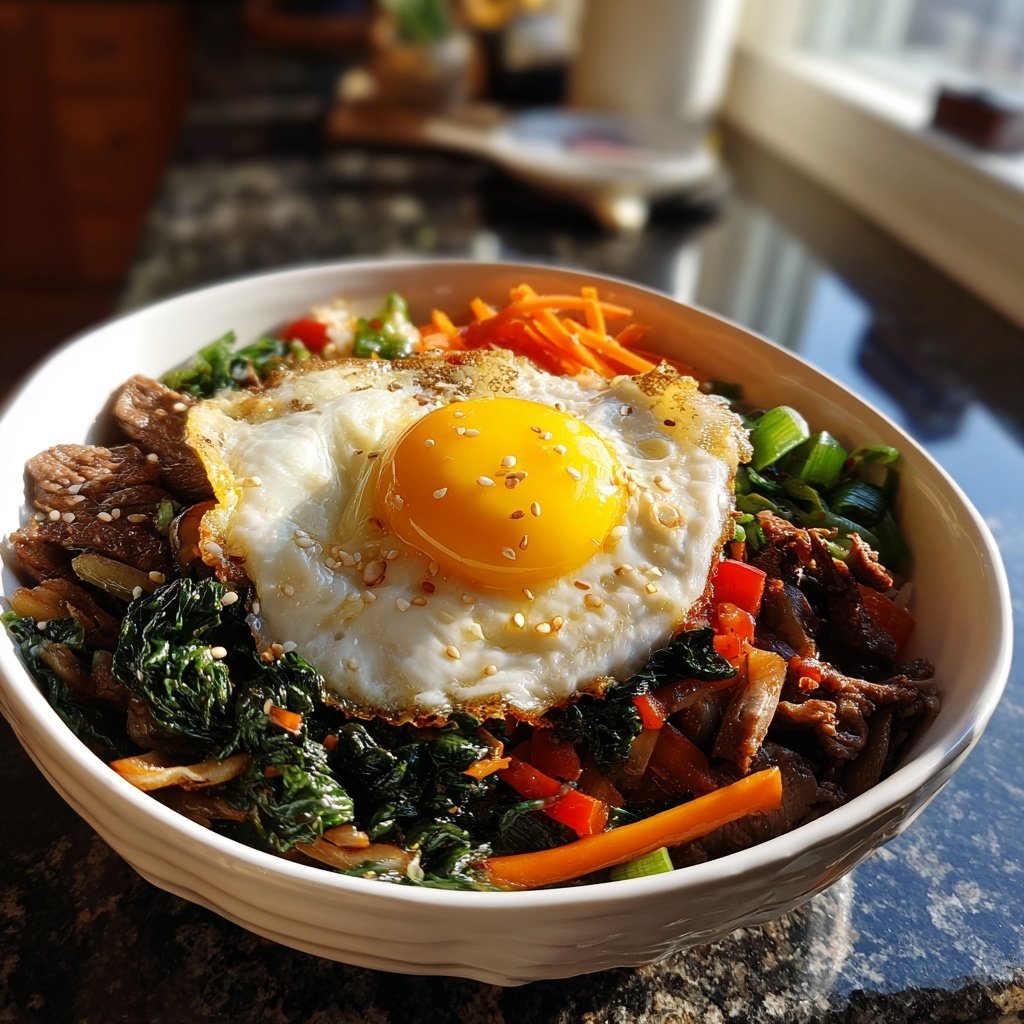
In a bowl, place a serving of rice and arrange the sautéed vegetables and spinach on top. Add the fried egg and sprinkle with sesame seeds. Drizzle with gochujang mixed with soy sauce and sugar.
Serve the Bibimbap hot and mix all the ingredients together before eating for the best flavor.
Pro Tips
- Feel free to add your favorite protein such as beef, chicken, or tofu to make it a heartier dish.
Tips for Perfect Bibimbap
To achieve the best flavor and texture in your bibimbap, using freshly cooked rice is essential. Jasmine rice is recommended for its fragrance and stickiness, which helps the ingredients cling together. For a more authentic experience, consider using a rice cooker to achieve perfectly fluffy rice every time.
When sautéing the vegetables, ensure not to overcrowd the pan. Cooking them separately allows each vegetable to retain its unique flavor and texture, enhancing the overall complexity of the dish. If you're in a hurry, pre-packaged vegetable mixes can also save time without sacrificing freshness.
Serving Suggestions
Bibimbap can be served as a main dish or part of a larger Korean meal. Pair it with traditional sides such as kimchi, pickled vegetables, or a light soup for a complete dining experience. These side dishes complement the flavors of bibimbap and add variety to your meal.
For those looking to enjoy bibimbap as a meal prep option, consider making larger batches of the sautéed vegetables and keeping them in the fridge. This way, you can quickly assemble a delicious bowl anytime during the week, making healthy eating convenient and enjoyable.
Questions About Recipes
→ Can I make Bibimbap in advance?
Yes, you can prepare the vegetables and rice in advance. Just assemble and serve with the fried egg and gochujang right before eating.
→ What can I substitute for gochujang?
You can use a mix of chili paste and miso as a substitute, but the flavor will be different.
→ Is Bibimbap vegetarian-friendly?
Yes, you can make it vegetarian by omitting the egg or using tofu instead.
→ Can I use brown rice instead of jasmine rice?
Yes, brown rice can be used, but it will alter the cooking time and texture.
Korean Bibimbap
Created by: Portia Langford
Recipe Type: Authentic Planning
Skill Level: Intermediate
Final Quantity: 4 servings
What You'll Need
For the Bibimbap
- 2 cups cooked jasmine rice
- 1 cup spinach, blanched
- 1 cup carrots, julienned
- 1 cup zucchini, julienned
- 1 cup shitake mushrooms, sliced
- 4 eggs
- 4 tablespoons sesame oil
- 4 tablespoons gochujang (Korean chili paste)
- 1 tablespoon soy sauce
- 1 teaspoon sugar
- Salt to taste
- Sesame seeds for garnish
How-To Steps
Heat 1 tablespoon of sesame oil in a skillet over medium heat. Sauté the carrots, zucchini, and shitake mushrooms separately until tender. Season with salt and set aside.
In a pot of boiling water, blanch the spinach for 1-2 minutes. Drain and rinse under cold water. Squeeze out excess water and season with a pinch of salt and 1 teaspoon of sesame oil.
In the same skillet, fry the eggs sunny side up in a little sesame oil until the whites are set but the yolk is still runny.
In a bowl, place a serving of rice and arrange the sautéed vegetables and spinach on top. Add the fried egg and sprinkle with sesame seeds. Drizzle with gochujang mixed with soy sauce and sugar.
Extra Tips
- Feel free to add your favorite protein such as beef, chicken, or tofu to make it a heartier dish.
Nutritional Breakdown (Per Serving)
- Calories: 600 kcal
- Total Fat: 25g
- Saturated Fat: 6g
- Cholesterol: 186mg
- Sodium: 420mg
- Total Carbohydrates: 85g
- Dietary Fiber: 5g
- Sugars: 5g
- Protein: 18g